Category: Business Development

  • Where to Find Free Images For Your Business Blog

    Where to Find Free Images For Your Business Blog

    Are you looking for trusted websites where you can find free images or photos for your own website? Photos and images that are not only free but high-quality and visually pleasing? There are many websites that offer free stock photos both for personal and commercial use and we are going to share with you our favorites. 


    Where to Find Free Images For Your Blog

    Unsplash

    Unsplash is one of the most popular websites to get free stock images. You can download images for commercial or non-commercial purposes and all of them are for free. You won’t need to cite and put credits to the photographer when using the photos, but attribution will always be appreciated.

    All kinds of photos can be found on Unsplash, from nature sceneries to people and flat lays.

    Pexels

    Pexels is a personal favorite on where to find free images that are high-quality and aesthetically pleasing. Photos are highly searchable as they are tagged with relevant keywords and all you have to do to get the ones you want is to type what you’re looking for in the search bar.

    All photos can be used for both personal and commercial purposes which you can modify to suit your needs. And while all images are free, you can show your gratitude to the photographers by making donations to your favorites. It’s not required but attribution is always appreciated.


    Find Free Images


    Pixabay

    This site has over a million free images that you can download and use for personal use, whether it’s on your blog or somewhere else. It also has free music clips and videos which can come in handy if you are doing multimedia content for your website.

    Pixabay gives you four different file size options to download which you can take advantage of to minimize using an image editor to reduce the file size before uploading the photos on your blog. You’ll have to create a free account though, to download full-resolution images.

    Picography

    This is another website that has a collection of thousands of stunning and high-resolution photos that you can use for your blog for free. Each photo comes with a Creative Commons License which means it can be used for any reason – personal or commercial. No sign-up is required, you can just download anything immediately.

    Stocksnap

    There are a lot of beautiful free photos on Stocksnap for your blog or website. In its wide collection, you’ll find photos related to people, social media, food, travel, technology, home, and more. Hundreds of high-resolution photos are added to the site daily so you’ll always find something new in here.

    You won’t be required to sign up but if you do create an account on Stocksnap, you will be able to save your favorite photos on your account.

    Foodiesfeed

    This site is the perfect stock photo site for food bloggers and food enthusiasts. Foodiesfeed has thousands of gorgeous and artistically shot food photos, and the best part is it’s all free! The curators of the site are picky and have standards on what images they allow on Foodiesfeed and so that’s why all photos you’ll find here are just simply stunning.

    Canva

    While Canva is mainly an online graphic design tool, it also offers free stock photos. While some photos need you to have a premium account to use them, there are hundreds of free ones that you can get without paying for a premium account.

    An advantage of using Canva is that you can easily customize the images you choose into an image that you’ll be using on your blog or other social media accounts. 


    For more articles like this, visit our blog.

  • How To Express Your Brand’s Story Through Videos

    How To Express Your Brand’s Story Through Videos

    6 Colorful Ways To Express Your Brand’s Story Through Videos

    When you create videos for your business, it’s important to have knowledge on how to have the creative ideas behind these videos as well as understand its production process. As you put out your product launches or campaigns, you always have to think about creating unique and engaging videos to cater to your audience. And knowing how to express your brand’s story through videos will allow you to increase your company’s social accounts engagements and have better aesthetics on your website.

    This post is going to be all about the process of creating these videos. We will be talking about how we start going into the creative setting, our strategy, and our goals for the videos we want to create. We will also cover the creative process, on how to pull visual inspirations for our content, planning the video production, finding the right people to work with, and doing the post-production processes.

    Social media is always evolving as we have mentioned in our previous articles, and video is becoming more popular and important than ever. Being in the digital marketing world, you have to possess skills to be able to traverse the creative and production space. And that’s exactly what we’ll be going on about in this post, on how to bring together a few essential elements to create amazing videos. Let’s get started.

    Why is Video Important for Marketing?

    With the increase in the need for video content in the digital marketing space, the lines between marketing, creative, and production teams have become blurred.  Marketing is about capturing your audience’s attention, and lately, videos are an excellent medium for that. 

    According to The Daily Carnage, mobile video consumption rises by 100% every year and 83% of marketers say that videos help them generate leads. In 2021, there was an 800% increase in global watch time of ad-supported video content. Learning these numbers is enough to conclude that videos are now a basic part of the digital world that needs you to level up your marketing effort to succeed.


    Define Your Goals to Create a Successful Video

    In the digital marketing field, having a clear strategy behind everything you do is vital. Your strategy is your map to achieving success and it’s no different when it comes to planning for your videos. In your strategy, you will have to define your goals for your video, who you’re target audience is, and why your video is important. 

    In goal setting, you’ll have to address several questions to aid you in creating your strategy. Depending on your brand and what you are trying to market, you’ll have to determine your top three objectives in creating your video content. It can be introducing your product or service, launching a new collection, teaching customers how to use certain things, or selling your product or service. 

    Define your target audience. When you think about your potential customer, you’ll be able to think about the types of questions that will help you define these people. But this time, you have to be as specific as possible. Being thoroughly specific will help influence how your visuals look and the type of aesthetics to go for in your video. It will also influence the platforms you’ll choose to have your videos uploaded on. It’s helpful to get as specific as possible with your target audience because that will definitely help your creative direction later on.

    You will also have to define your values. This will help determine what type of copy to make and what type of visuals to have in your video. How do you want your viewers to perceive you? Do you want to be for the masses or for the luxurious? This will help you narrow down the type of visuals you’ll want to produce in your video.

    Finally, you also have to choose the platforms to upload your videos on. Where do you want to focus? YouTube is best for longer form informational videos, TikTok is great for quick and engaging videos, as well as Instagram Reels, Facebook is a great platform for emotional or informational videos, and your website is best for how-to’s, campaign videos, and general brand videos. 

    Think about what your company’s goals have right now and why your brand wants to create videos. Having a clear ‘why’ will help you out tremendously.


    How To Express Your Brand's Story Through Videos


    Concepting Visuals to Build Your Marketing Video

    Now that you have your goals and strategies in place, you can begin conceptualizing your video and how it will come to life. This process will include pulling together a mood board to get visual ideas. Inputting together your mood board, you’ll have to consider your lighting, your props, your background, and other types of visuals. Watching videos on Vimeo and YouTube will help you brainstorm ideas for this.

    Start conceptualizing by making a mood board and to start it, I highly recommend going through Pinterest because you can get a lot of inspiration from there. Pick your top images that go cohesively together. You can use Canva or Adobe Illustrator to create a mood board template. When you look at the mood board you created, it should give you a specific feeling and every image has to be cohesive or connected with the one next to it.

    To get you started with what images to include in your mood board, here’s a checklist:

    • 3-4 images that represent the types of models
    • 3-4 images that represent the types of space that you want to shoot in
    • 3-4 images that represent the lighting and ambiance

    When you’ve checked all of these boxes, you should be able to put together a cohesive mood board that will serve as the visual inspiration for your video.

    You can also write a couple of phrases or words under the photos you put together to describe what’s happening in your mood board. 


    Writing Your Marketing Video Script

    Now that your mood board is done, you can start writing your copy or video scripts. You don’t need to write a whole movie scene, you just have to prepare a short and concise copy that will express how you want your brand to be perceived in the video.

    Start off with writing out all the things you want to get into your video. When you’re creating your script, make sure to write in the tone of voice of the target audience you are looking to attract. You want to use words that will be appealing to your audience.

    You want to have an engaging hook, a concise body that includes all the information you want to disseminate, and finally closing and a call to action telling your viewers what to do, whether it be to purchase something, to learn more, etc.

    Once you have your script laid out, it’s important you make a recording of the whole thing to see how long it takes for the whole copy to be spoken. Doing this will help you make sure that your video is long or short enough to fit the platform you’re going to upload it in. 

    Choosing Your Location and Production Equipment

    Now that we have all the things above, it’s time to get into planning the production. In order to proceed with actually shooting your video, you’ll need to look for your location and have the right equipment. 

    In finding the perfect shooting location, there are things to consider because you have a lot of different options. You can shoot in a studio that already has all the equipment you need, or you can shoot on location and bring your own equipment. There are pros and cons to each option. Typically, shooting on location can be a bit more challenging because you’ll have to bring your own equipment. As for shooting in a studio, you’ll have to create the look you want to build for your video. You also have to consider the studio’s availability dates and what equipment they have on hand.

    Another thing to consider is the recording sound onset you have. This factor is often overlooked but because the sound is vital in videos, it’s important you know if your location or the studio is soundproof or if there are any sounds that will get picked up by the video. 

    Work with your videographer so that they will understand the exact type of ambiance you desire. 


    Sourcing Models and Props for Your Video Shoot

    In the next part after securing your location, you’ll then need to source your models and find your props. Your models and props will bring your video to life so you have to really be thorough in picking these. You might work with a casting director if you have a large-scale project, or with a smaller team and hire models yourself. Regardless, if you have to take in any task in the video production process, you’ll want to have a look at the models you select so that you can achieve your vision.

    When sourcing models, there are a few options you can use. You can work with a modeling agency, use a talent sourcing site such as Swipecast, or just search through Instagram.

    As for props, you can be as resourceful as you can. Props can be everywhere. It can be your daily things, a chair from your house, or from a local prop rental studio. You can also get some items from Amazon if you can’t find them at your local store. 

    Planning for Post-Production of Express Your Brand’s Story Through Videos

    The last thing on the list here is the post-production of your video. Now that you have your creative and production plans, it’s time to plan for your post-production. 

    Knowing the exact specs for how the video will be edited, will help your videographer plan the way they shoot the video and the angles that they use. You also have to consider the different specs and requirements for the sizes of your video. Has your video been edited for multiple platforms, like Instagram, YouTube, Facebook, TikTok, Vimeo, and more? This will allow you to make the most of your investment and will also allow your customers to have the same experience across multiple platforms. Having your videos sized properly makes the process easier when it’s time to upload your campaigns. 


    Final Thoughts

    As marketers, it is so important to know how to create videos. Learning how to express your brand’s story through videos is what every marketer needs to know in this digital age. Hopefully, this deep dive into the world of video production gave you a sense of knowing. Now that you know the video production process, it’s time to put what you learned into action. 

    For more articles like this, do visit our blog!

  • 30 Digital Marketing Quotes To Inspire You Today

    30 Digital Marketing Quotes To Inspire You Today

    30 Digital Marketing Quotes To Inspire You Today

    The top priority of marketing has always been about reaching and selling to a specified audience. As the practice has now branched out digitally as the technology evolves and improves, it has changed the scope of where you can find that audience.

    Check out the quotes below:

    Digital marketers are always looking for innovative solutions to improve their systems and strategies. There’s an infinite supply of legit wisdom about digital marketing on the internet. In our post for today, we are sharing motivational digital marketing quotes to inspire you to keep reaching for your goals.

    1. “Marketing is no longer about the stuff that you make, but about the stories you tell.” – Seth Godin, Bestselling Author and Blogger
    2. “People don’t buy what you do, they buy why you do it.” – Simon Sinek, Bestselling Author, Motivational Speaker and Marketing Consultant
    3. “You can’t sell anything if you can’t tell anything.” – Beth Comstock, Vice Chair of General Electric
    4. “Stop selling. Start helping.” – Zig Ziglar, Author and Motivational Speaker
    5. “It’s hard to find things that won’t sell online.” – Jeff Bezos, CEO of Amazon
    6. Don’t say anything that you wouldn’t want plastered on a billboard with your face on it. – Erin Bury, CEO of Willful
    7. “Google only loves you when everyone else loves you first.” – Wendy Piersall, Author, Blogger and Artist
    8. “Either write something worth reading or do something worth writing about.” – Benjamin Franklin
    9. “Content builds relationships. Relationships are built on trust. Trust drives revenue.”– Andrew Davis, Bestselling Author and Keynote Speaker
    10. “Content marketing is a commitment, not a campaign.” – Jon Buscall, Chief Executive Officer of Moondog Marketing
    11. “One of the best ways to sabotage your content is to not tie it to your goals. Know why you’re creating content.” – Ellen Gomes, Senior Content Marketing Manager at Marketo
    12. “Innovation needs to be part of your culture. Consumers are transforming faster than we are, and if we don’t catch up, we’re in trouble.” – Ian Schafer
    13. “How can you squander even one more day not taking advantage of the greatest shifts of our generation? How dare you settle for less when the world has made it easy for you to be remarkable?” – Seth Godin
      30 Digital Marketing Quotes To Inspire You Today
    14. “Mobile is no longer about what you can do on your cell phone. Mobile is all about doing more, all of the time.” – Mitch Joel
    15. “A marketing person should always ask one key question when beginning to develop a social media strategy: How much chaos can this organization handle? – Gary Stein
    16. “If content is king, then conversion is queen.” – John Munsell
    17. “Our head of social media is the customer.” – McDonald’s
    18. “‘Build it, and they will come’ only works in the movies. Social media is a ‘build it, nurture it, engage them, and they may come and stay.’” – Seth Godin
    19. “The best marketing doesn’t feel like marketing.” – Tom Fishburne
    20. “The consumer is not a moron; she is your wife.” – David Ogilvy, the Father of Advertising, Founder of Ogilvy & Mather
    21. “When people ask me what’s the ROI of Social, I ask them… what’s the ROI of Trust, and what’s the ROI of Loyalty. The answer, when used to build relationships the results will be… longer lifetime value of a customer, larger average order value, and increased frequency of purchase. All measurable and all lead to increased sales and profits.” – Ted Rubin
    22. “Inspiration is the most important part of our digital strategy.” – Paull Young
    23. “Think about what the user is going to type” – Matt Cutts
    24. “New marketing is about the relationships, not the medium.” – Ben Grossman
    25. “SEO is not something you do anymore, it’s what happens when you do everything else right” – Chad Pollitt
    26. “You can’t fool all the people, not even most of the time. And people once unfooled, talk about the experience.” – Seth Godin
    27. “Social media is about sociology and psychology more than technology.” – Brian Polis
    28. “Marketers need to build digital relationships and reputation before closing a sale.” – Chris Brogan
    29. “You have to understand as a marketer that consumers are functioning in the age of efficiency.” – Mitch Joel
    30. “Quit counting fans, followers, and blog subscribers like bottle caps. Think instead about what you’re hoping to achieve with and through the community that actually cares about what you’re doing.” – Amber Naslund

    These digital marketing quotes are here to serve as a guide and as an inspiration for people who want to excel in this field. Take these words of wisdom, reflect on them and apply them to your work. 

    In need of digital marketing solutions? VE Digital offers copywriting, SEO, social media marketing, and more.

  • 7 Ways to Grow your Social Media Presence Good

    7 Ways to Grow your Social Media Presence Good

    7 Ways to Grow your Social Media Presence Good

    In this age, social media can be a lifeline, and when it comes to taking action, everybody wants an in. If you are seeking more ways to grow your social media presence, this article is made for you.

    Whether it’s Facebook, Instagram, Twitter, TikTok, or Pinterest, everybody wants to have good social media recognition for their businesses. Having a good social media presence can help your business grow but this usually just happens when you have a certain amount of followers. Here are some ways to increase and grow your social media presence to achieve your social media marketing goals.

    Grow your Social Media Presence

    Ways to Grow your Social Media Presence


    Identify your Goals and Objectives

    To grow your social media presence, you will need to identify first what you want to achieve with it. Know how each social media platform works and what type of audiences you can reach in each one. Know your objectives and what your intentions are before you start posting.


    Personalize and Humanize your Brand and Grow your Social Media Presence 

    Make your brand look real and human. Aesthetic visuals are great but more than that, people crave authenticity and this means that you have to make sure that your brand is run by humans and not just automated. Interaction is key for any social media platform. Respond to comments and interact with your audience when they show interest in your posts. This simple act will develop your connection with your audience and will establish trust which is very vital if you want to grow your social media presence.

    Understand Your Audience’s Needs Grow your Social Media Presence

    Aside from interactions and knowing how to reach your audience on a certain platform, knowing and understanding your audience’s needs is important. Providing value to your followers is one of your priorities, thus knowing what they want to read about is key.


    Link Your Social Media Profiles to your Website

    We are going to assume that you already have a website for your business. With this assumption, make sure to have your social media links in it. It’s important to have your social icons on your website because this makes it easier for those who stumbled upon your site to have access to your social media accounts. This will make it simple for your audience to follow you and connect with you. Don’t make it hard for them to search for you online because most people won’t have the energy to do so.


    Share Your Socials with Everyone Grow your Social Media Presence

    Share your social media pages with your friends, family, colleagues … basically, everyone you know. Don’t be shy but also, don’t be spammy. Sharing your socials will let other people know that you have an online presence on each platform and they can share it with their circle of friends and family. This is how you spread the word.


    Create Relevant and Valuable Content

    This may be said time and time again but producing valuable content is really the heart of any marketing strategy. Content is and will always be king, and this does not only apply to blogs but also to social networking platforms. Consumers and people, in general, gravitate to things that give value to them and making your content relevant and helpful for your audience is showing you care about taking a bit of their time.


    Use Hashtags Grow your Social Media Presence

    Hashtags are very helpful, especially on Instagram. Using them will make your post visible to more people. Even using them on Twitter, Facebook, and Tiktok is helpful in widening your reach. Just remember to use RELEVANT hashtags that are related to what your post is about.


    Provider FAQ’s

    Q & A’s are very much helpful for people seeking what your brand is and what your company does. Make an FAQ section on your website and socials to answer common questions that new followers always ask.


    Engage, Engage, Engage! Grow your Social Media Presence

    When people like and comment on your social media pages, the right way to respond is to engage with them. Let your followers know that you are listening to them and reading what they are saying. Engaging with your audience is also an important thing to do to grow your social media presence.


    Stay Active and Be Consistent

    Social media is a game of visibility and with so many brands out there, being out of sight even for just a while will definitely put you out of your customer’s minds. So it’s crucial to stay active and post consistently on your social networking profiles.

    Success does not happen overnight and social media needs you to experiment, analyze, and sometimes take risks to learn what strategy is suitable for your brand to connect and build an audience.

    Plan Your Content Grow your Social Media Presence

    Plan your content ahead of time so that you don’t run out of ideas. There will always be times when your creative juices are dry, so having a content calendar will benefit you and your team.


    These helpful tips to grow your social media presence are ideas we’ve come up with from our own experience of managing our social media profiles. Social media is a long-term commitment and you need to have patience if you want to generate the results you want.

    Building your social media presence is continuous. Just remember that the heart of it all is about staying in tune with your audience and providing them with what they need. The rest follows.


    Read next: Make the Most of Your Social Media Presence With These Tips!

  • 13 SEO Tips for Beginners to Optimize your Website

    13 SEO Tips for Beginners to Optimize your Website

    13 SEO Tips for Beginners to Optimize your Website

    The modern era keeps on producing new techniques on how to keep your game up in the digital marketing world. With lots of SEO tips for beginners you can find over the internet, here are some fundamental principles that you should not overlook.


    Remove Anything that Slows Down Your Site

    Your website’s load speed is crucial when it comes to SEO. While in the past, a slow-loading page is okay, in our fast-paced world today, it’s not just acceptable.

    A slow-loading page will annoy and frustrate a user and will discourage them from browsing your site and buy any of your products or services.

    A website’s loading speed is also important for search engines. Take note that Google listed site speed as one of their ranking factors, so if your pages are slow, you better fix it up!

    To assess your website speed, use Google Page Speed. It will show you what’s causing your page to load slow.

    Get rid of non-essential things that slow down your sites like plugins and unnecessary widgets on your sidebar.


    Conduct keyword research

    Keywords are another vital part of having an SEO-optimized website. These are how people will find you when they search up the internet. Hence, conducting keyword research is important so you know what effective keywords to use and target on your site.

    Website SEO optimization depends on the relevant keywords on your website. A good way to start your keyword research is by using an online tool like Google Keyword Planner, SEMrush, Ahrefs, or KeywordsFX. Use these tools to find data about the keywords that are significant to your brand and structure a strategy on how to employ them on your website.

    You can use these keywords by including them in your content by writing quality blogs and landing pages, and also including them in your meta tags and photo alt texts.


    Target long-tail keywords vs. short-tail keywords

    As you dive into keyword research, you’ll have a bunch of keywords you want to incorporate into your website. Now that you understand the importance of keywords, it’s time to understand the difference between long-tail and short-tail keywords.

    Basically, short-tail keywords are 1-3 words long. They usually have high search volumes and competition, like “long dresses”, and are harder to rank for. While long-tail keywords are longer and much more specific, like “long dresses to wear for summer”. Phrases like this have lower search volumes and competition, but these are the kinds of keywords a user search for when they are closer to the point of purchase.

    Targeting long-tail keywords may only provide you lesser traffic, but the ROI will be higher as you attract your ideal audiences.


    Optimize your title tags

    Title tags are like headings, they create the first impression and are crucial when you want that impression to last. Your title tags will determine whether a viewer will click through your link, so highly optimized, informative, and attractive titles are a must.

    Avoid having click-bait titles and go for something that will describe what your page is about. To make it attractive, create your title with the right amount of spice to get readers both excited and curious to know what your content is about.


    Here are useful tools for you to use:


    Optimize your meta descriptions

    Just like your title tags, make sure to optimize your meta descriptions as well. These are what appear below the title tags in search page results. even if they don’t serve as a ranking factor, you shouldn’t neglect them from your SEO strategy.

    Including your keywords in the meta descriptions will help users get a glimpse of your content.


    13 SEO Tips for Beginners to Optimize your Website


    Use keywords in headings and paragraphs

    Another SEO tip for beginners is to insert keywords in your headings and paragraphs. Having these target keywords inside your content will help Google determine that your piece of content is relevant to a specific topic. It’s a crucial part of its ranking algorithm.

    Include your keywords in your H2 and H3 headings, and your paragraphs like lists and tables, and insert them as naturally as possible. You don’t want to sound spammy and repetitive just for the sake of having your keywords in your content.


    Go ahead and Link to Other Websites with Relevant Content

    Some may think that linking out to other relevant websites is bad because you’re leading people outside of your page, but it’s quite the contrary.

    Link-building is important if you want to get your website to rank on search page results. It’s another ranking factor that Google and other search engines consider.

    Link out to trustworthy sites and if they would link back to you, Google will see your site as another authority on that topic.

    Read: Tips and Strategies for Strong Link Building


    Include keywords in URLs, but keep your URLs simple and readable

    Just like the URL to this page, having readable URLs will help search engines acknowledge your page. Include your core keyword and stray away from having a generic numerical URL like digitalSEO.com/article/29845678. URLs like these don’t tell the user what the page is about and will hurt your website in the long run.


    Use the Right Keywords in Images

    Don’t neglect the images in your website because they are also important in SEO.

    When users search up for an image, they also use keywords. So it’s important to keep in mind to always name your images’ alt text with the proper keywords.


    Make content optimized for mobile responsiveness.

    In today’s generation where almost all of the population own a mobile phone, it just makes sense to optimize your website so that it will be responsive to mobile. Make sure that your content does not look too cluttered and don’t forget to optimize your site loading speed!


    Claim your physical address on Google Maps

    If your business has a physical store, don’t forget to claim your address on Google Maps.

    Complete your Google My Business profile and provide it with immediate information about your company.

    When your business is listed on Google My Business, you can gain reviews and tagged photos from your customers which will help make your site even more reliable and authoritative.


    Update your Website Consistently

    Publish fresh and engaging content on your website to keep it relevant and updated to improve your SEO. This will tip up Google that your site is constantly spewing quality content and will help with your rankings.


    I hope you found these SEO tips for beginners helpful. Let these guide you to start optimizing your website for SEO and you’ll be one step closer to making your site rank higher and gain more traffic. 


  • 10 Wonderful Digital Marketing Books You’ll Want to Read

    10 Wonderful Digital Marketing Books You’ll Want to Read

    10 Wonderful Digital Marketing Books You’ll Want to Read

    In digital marketing, the theory is just as important as the application. Our key to success in this industry is marketing the products that we built right. It’s about how we tell the story, know our audience, and actively engage and interact with them. That’s why marketers and product managers must work closely together to ensure unity and consistency. Digital marketing is an ever-evolving field and the trends change every time. Here are 10 digital marketing books you’ll want to read to give you the knowledge and keep you in the loop. 


    10 Wonderful Digital Marketing Books You'll Want to Read

    10 Digital Marketing Books You’ll Want to Read

    What Customers Crave by Nicholas Webb

    What Customers Crave examines how the hyper-connected economy is radically changing consumer expectations and reveals what companies need to do to stay on top. The solution rests on two simple questions: What do your customers love? What do they hate? Find the answers, and you’re well on your way to success. Jam-packed with tools and examples, What Customers Crave helps you reinvent how you engage with customers (both digitally and non-digitally) and:

    What Customers Crave by Nicholas Webb

    • Gain invaluable insights into who they are and what they care about
    • Use listening posts and Contact Point Innovation to refine customer types
    • Engineer experiences for each micro market that are not only exceptional but insanely relevant
    • Connect across the five most important touchpoints
    • Co-create with your customers

    When you learn to provide your customers with exactly what they want, they not only buy—they come back again and again…and bring their friends. (source)

    One key in having a successful digital marketing strategy is to know your customers. To improve your marketing offers, you need to know what problems your audience has and how to solve them. What do your customers desire? Once you know your customers, you’ll have ideas on what their expectations are and you can do your best to meet them. This book is packed with tools, examples, and resources to help businesses reinvent how they engage with their customers both physically and virtually.


    Building a Story brand by Donald Miller

    Building a Storybrand by Donald Miller

    Donald Miller’s StoryBrand process is a proven solution to the struggle business leaders face when talking about their businesses. This revolutionary method for connecting with customers provides readers with the ultimate competitive advantage, revealing the secret for helping their customers understand the compelling benefits of using their products, ideas, or services. Building a StoryBrand does this by teaching readers the seven universal story points all humans respond to; the real reason customers make purchases; how to simplify a brand message so people understand it; and how to create the most effective messaging for websites, brochures, and social media. Whether you are the marketing director of a multibillion-dollar company, the owner of a small business, a politician running for office, or the lead singer of a rock band, Building a StoryBrand will forever transform the way you talk about who you are, what you do, and the unique value you bring to your customers. (source)


    This book is written by a New York Times bestselling author and it’s a proven solution to equip business leaders who are struggling with their businesses. The book offers revolutionary methods for connecting with consumers and provides the readers with competitive tips they can apply in real life.


    Contagious by Jonah Berger

    Contagious: Why Things Catch On by Jonah Berger

    What makes things popular? Why do people talk about certain products and ideas more than others? Why are some stories and rumors more infectious? And what makes online content go viral?

    If you said advertising, think again. People don’t listen to advertisements, they listen to their peers. But why do people talk about certain products and ideas more than others? Why are some stories and rumors more infectious? And what makes online content go viral?

    Contagious combines groundbreaking research with powerful stories. Learn how a luxury steakhouse found popularity through the lowly cheese-steak, why anti-drug commercials might have actually increased drug use, and why more than 200 million consumers shared a video about one of the seemingly most boring products there is a blender. If you’ve wondered why certain stories get shared, e-mails get forwarded, or videos go viral, Contagious explains why, and shows how to leverage these concepts to craft contagious content. This book provides a set of specific, actionable techniques for helping information spread – for designing messages, advertisements, and information that people will share. Whether you’re a manager at a big company, a small business owner trying to boost awareness, a politician running for office, or a health official trying to get the word out, Contagious will show you how to make your product or idea catch on. (source)


    This book is a best seller for a reason. It offers specific, actionable tactics to help you spread your message effectively by having the right design and making the right shareable content. This book is for everyone, whether you are a small or big business owner, a manager, a politician, or an educator. This book will show you how to make your idea or product stand out and go out into the world.


    Influence: The Psychology Of Persuasion By Robert Cialdini

    Influence: The Psychology of Persuasion by Robert B. Cialdini

    Influence, the classic book on persuasion, explains the psychology of why people say “yes”—and how to apply these understandings. Dr. Robert Cialdini is the seminal expert in the rapidly expanding field of influence and persuasion. His thirty-five years of rigorous, evidence-based research along with a three-year program of study on what moves people to change behavior has resulted in this highly acclaimed book.

    You’ll learn the six universal principles, how to use them to become a skilled persuader—and how to defend yourself against them. Perfect for people in all walks of life, the principles of Influence will move you toward profound personal change and act as a driving force for your success. (source)


    This may be an old book, but it’s definitely one of the best marketing books out there. Influence offers an effective outline for understanding what leads people to make decisions. The author uses true-to-life examples to guide the readers through the six principles of persuasion. Although you won’t be learning about certain channel techniques for digital marketing, this book gives you the building blocks to achieve a digital marketing strategy that guarantees positive conversion outcomes through the application of consistency, social proof, authority, reciprocity, and more.


    Digital Marketing Strategy by Simon Kingsnorth

    Digital Marketing Strategy: An Integrated Approach to Online Marketing by Simon Kingsnorth

    Digital and social media are essential aspects of a marketing department’s function; therefore, it is important that they are integrated into the organization’s wider goals. Uniting digital marketing techniques with business strategy and established marketing models such as the 7 P’s, Porter’s Five Forces, and Customer Lifetime Value, author Simon Kingsnorth demonstrates how to formulate the best strategy for a company.

    Rather than presenting a “one size fits all” model, Kingsnorth brings various strategies to life through case studies, charts, illustrations, and checklists. Digital Marketing Strategy covers what digital marketing is, how to budget and forecast, acquisition, personalization, customer service, user experience, content strategy, how to analyze and perform social measurements, and how to structure and present a digital marketing plan in order to win support and funding. (source)


    It has all things social media, content marketing, SEO, user experience, automation, customer loyalty, and more. This book is a roadmap for digital marketers who want to optimize their strategies. It offers practical implementation guides on SEO, email, paid search, lead gen, and more.


    Hacking Growth by Morgan Brown & Sean Ellis

    Hacking Growth: How Today's Fastest-Growing Companies Drive Breakout Success by Sean Ellis & Morgan Brown

    So how did these companies grow from these humble beginnings into the powerhouses they are today? Contrary to popular belief, they didn’t explode to massive worldwide popularity simply by building a great product then crossing their fingers and hoping it would catch on. There was a studied, carefully implemented methodology behind these companies’ extraordinary rise. That methodology is called Growth Hacking, and its practitioners include not just today’s hottest start-ups, but also companies like IBM, Walmart, and Microsoft as well as the millions of entrepreneurs, marketers, managers, and executives who make up the community of GrowthHackers.com.

    Think of the Growth Hacking methodology as doing for market-share growth what Lean Start-Up did for product development, and Scrum did for productivity. It involves cross-functional teams and rapid-tempo testing and iteration that focuses on customers attaining them, retaining them, engaging them, and motivating them to come back and buy more. (source)


    This book is a comprehensive toolkit that every company in any industry can utilize to implement its own growth strategy. This book covers how to set up and run growth teams how to identify and test growth levers, and how to evaluate the results. It focuses on customers, on how to get them, keep them, engage them, and monetize them. With this book, you will learn how to increase your customer base and market share. It will also walk you through the process of creating and executing your own growth hacking strategy.


    Permission Marketing By Seth Godin

    Permission Marketing: Turning Strangers Into Friends And Friends Into Customers by Seth Godin

    Whether it is the TV commercial that breaks into our favorite program, or the telemarketing phone call that disrupts a family dinner, traditional advertising is based on the hope of snatching our attention away from whatever we are doing. Seth Godin calls this Interruption Marketing, and, as companies are discovering, it no longer works.

    Instead of annoying potential customers by interrupting their most coveted commodity—time—Permission Marketing offers consumers incentives to accept advertising voluntarily. Now, this Internet pioneer introduces a fundamentally different way of thinking about advertising products and services. By reaching out only to those individuals who have signaled an interest in learning more about a product, Permission Marketing enables companies to develop long-term relationships with customers, create trust, build brand awareness — and greatly improve the chances of making a sale. (source)


    Anything written by Seth Godin is worth the read, and this book is a great one as it can influence your approach to marketing strategy.

    This book focuses on the importance of building a relationship with your audience and customers gradually over time. Once that relationship is established, your marketing will be most effective as your target audience has given your the ‘permission’ to market to them.


    Everybody Writes by Ann Handley

    Everybody Writes: Your Go-To Guide to Creating Ridiculously Good Content by Ann Handley

    Everybody Writes is a go-to guide to attracting and retaining customers through stellar online communication, because in our content-driven world, every one of us is, in fact, a writer.

    If you have a website, you are a publisher. If you are on social media, you are in marketing. And that means that we are all relying on our words to carry our marketing messages. We are all writers.

    Yeah, but who cares about writing anymore? In a time-challenged world dominated by short and snappy, by click-bait headlines and Twitter streams and Instagram feeds and gifs and video and Snapchat and YOLO and LOL and #tbt. . . does the idea of focusing on writing seem pedantic and ordinary? (source)


    When you get into digital marketing, writing will always be part of the job. This book is a helpful guide to make your writing better. If you are looking to improve your copy and content, Ann Hadley has great tips and guides to write engaging content that will attract and retain customers.


    They Ask, You Answer by Marcus Sheridan

    They Ask You Answer: A Revolutionary Approach to Inbound Sales, Content Marketing, and Today's Digital Consumer by Marcus Sheridan

    A revolutionary marketing strategy has proven to drive sales and growth They Ask You Answer is a straightforward guide to fixing your current marketing strategy. Regardless of your budget, you are almost certainly overspending on television, radio, and print ads, yet neglecting the number-one resource you have at your disposal: the Internet. Content marketing is no longer about keyword-stuffing and link-building; in fact, using those tactics today gets your page shuffled to the bottom of the heap. Quality content is the key to success, and you already have the ingredients in-house. This book shows you how to structure an effective content strategy using the same proven principles that have revolutionized marketing for all types of businesses, across industries. (source)


    In today’s digital age, the strategies that proved to be effective years ago may not be up to par in the current time. To have success in the digital marketing scene, businesses must be all about getting to know what makes their customers tick. What are their audience’s concerns, questions, and problems? And how can they help provide a solution for them? Every day, consumers rely on the internet to answer their endless questions. Having the answers to what they need is the key to attracting new customers to become potential buyers to your company. This is what this book is all about.


    Content Machine By Dan Norris

    Content Machine: Use Content Marketing to Build a 7-figure Business With Zero Advertising by Dan Norris

    Content Machine outlines a strategy for using content marketing to build a 7 figure business with zero advertising.

    By teaching the fundamentals of content marketing, how to create great content, and how to stand out from the crowd, simplifies the otherwise challenging process of creating content with impact.

    The book outlines the #1 biggest mistake that kills content marketing efforts and how the best content marketers in the world have built their audience, their content, and their business. It provides downloads and frameworks to help the reader with every aspect of content marketing, from idea generation to writing guidelines, to hiring and scaling a content team.

    Whether you are a blogger, content marketer, entrepreneur, or marketing manager, Content Machine will help you see the return you deserve from your content marketing efforts. (source)


    For those who want to improve and develop their content marketing strategy to commercial success, this is a very good book to read. It contains more than just creating blog posts and mastering SEO techniques. It’s a book that will change your whole perspective on that matter.


    Read more articles like this on our blog.

  • 5 Reasons Why Having High-Quality Photos On Your Website Is Crucial

    5 Reasons Why Having High-Quality Photos On Your Website Is Crucial

    5 Reasons Why Having High-Quality Photos On Your Website Is Crucial

    When you own a website for your business, it’s a no-brainer to maximize its potential. Meaning you have to optimize it for SEO, improve its loading speed, and assure that your visitors will have a pleasant experience when browsing through your website. One integral part of a website that is often neglected is its visuals, and today, we are going to be discussing why having high-quality photos on your website is important.

    Images and videos are a big deal in a business website especially when you are selling tangible products and services. Are you in the fashion industry? Do you sell books? Are you a restaurant that wants to showcase your menu online? Do you offer spa services? In any case, having high-quality photographs on your website is crucial as it sets the tone for when your visitors view your website.

    Here are five (5) Reasons Why High-Quality Photos On Your Website Is Crucial:


    Visual Content Marketing

    This term refers to communicating and advertising your products/services using different forms of visuals such as photos, videos, illustrations, graphics, and the like. Having a strong visual presence for your brand is a great marketing strategy today because people nowadays lean mo towards visuals rather than just plain texts.

    Having high-quality photos on your website is crucial because it can effectively communicate who you are as a brand to your potential clients before they even read a word about you.

    The average person is bombarded with information and so having appropriate images will help them process the content better and faster.


    Strengthens your Brand

    The photos on your website enforce the impact of your brand on your current and future customers. So it’s only ideal to put out images that represent your business. Crappy photos or having none at all will negatively affect not only your website but also your company overall.


    5 Reasons Why Having High-Quality Photos On Your Website Is Crucial


    Enhances your SEO

    When a viewer clicks through a website, the first thing that catches their attention is the visual of the screen they are looking at. Having clean, crisp, and professional-looking photographs will make your online presence attractive and welcoming. These visuals on your website will provide your viewers a great user experience and they will more likely click through your links.

    For example, you are a restaurant owner and you’re launching a new website to branch out online and reach a larger audience. Having a well-designed website is one thing, but having high-quality and professional photos of your menu is another. It will not only level up your website, but it will also entice more customers to actually visit and order from your restaurant.

    Visually pleasing photographs can also mean more shares on social media which will drive more traffic to your website.

    When adding images to your website, don’t forget to properly name them and include alt text descriptions and image title tags.

    See one of our case studies: Bánh Mì Lê


    Can Convert Leads

    High-quality photos on your website will definitely attract more viewers and this will increase your SEO. With useful images, having an increase in user engagement will also mean longer visit times from your visitors allowing you more time to sell your product or services via both your content and visuals.

    Let your photos tell your story and explain what your company is about. Forming this relationship with your audience will build trust which means that they will more likely choose your services.


    Sell Your Product/Service Better

    Using photos is an incredible way to tell a story. Leverage photos and other visual images to elevate your brand’s story and show off your products and services.

    Make sure to use crisp and high-quality photos for the best results! 


    Guidelines in Using Photos On Your Website

    • Use professional photos. You can hire someone for photography services if you struggle in this area. There are a lot of reputable agencies and freelancers you can trust. VE Digital offers photography and videography services.
    • If you are using stock photos, always get them from leading stock photo sites like pexels, istockphoto, and Shutterstock.
    • Strive to show positive imagery. Always spread positivity. Showing photos of happy and smiling people emits good vibes and positive energy, and this will invoke positive emotions from your viewers and site visitors.
    • Less is more. Fewer and bolder photos attract audiences better than lots of smaller photos scattered all around your website. Make sure that each photo is relevant and significant.


    When planning for your website, always consider putting in high-quality photos and images. If graphic design and photography is not your strength, you can always outsource and find affordable ways to get someone to help you out. 

    No matter where you get your photos, your priority is to ensure that your visitors have a great user experience. With the right mix of stock images and original photos, you’ll be able to bring in more leads, improve your rankings, and boost conversions.

    Looking for someone to help you out with your photo and graphic needs? We offer graphic design, photography, and videography services, contact our team today!

  • 15 Digital Marketing Tools For Small Businesses

    15 Digital Marketing Tools For Small Businesses

    15 Digital Marketing Tools For Small Businesses

    Running a small business can be challenging. Sure, you built the business, but are you marketing it right? What tools do you use? Do you know that digital marketing is an important part of the puzzle in your marketing strategy today? 

    When you’re just getting started, you’ll need all the support you can get in terms of tools that will save you time and money. After many years of running our digital marketing business and dealing with small businesses, we’ve learned firsthand the importance of knowing what tools are available. Having these digital marketing tools for small business owners can transform your company.

    There are various digital marketing tools for small businesses from Email Marketing, Social Media Marketing, Mobile Marketing, Blog Marketing, Web Analytics and more. Small businesses want to develop without investing a lot of money; they want to grow gradually and with little risk. And one of the most effective methods to do so is through digital marketing.


    Digital Marketing Tools For Small Businesses

    Google Analytics 

    We can’t emphasize how important it is to use Google Analytics. Numbers are a marketer’s best friend. We utilize numbers to help us make decisions. So, what kinds of decisions might Google Analytics assist you with? Site traffic, landing pages, and the areas from which users access your site, and all of these things are important in establishing the health of your website and marketing plan.

    Where are your viewers coming from? Is it organic traffic from Google searches or perhaps redirections from your socials?

    With Google Analytics, you can learn a lot about your site and its audience. This is an essential tool for analyzing how well your website is working, and it’s no surprise that it’s one of the most popular analytics tools accessible today.

    Although at first, it can be overwhelming and confusing, there are free courses online to help you learn how to use and master it. So if you want to better understand your audience and what they like on your website, Google Analytics is a great tool to make use of. And the best part? It’s free!

    Google Search Console 

    Google Search Console

    Google is the leading search engine for a reason and what’s great about them is they offer free tools that you can leverage to improve your site and get it to rank on search. Google Search Console is a great tool to utilize. The reports you get in it can help and assist you to measure the performance and traffic of your website.

    With this tool, you can also add a sitemap of your website to get it crawled by Google Bots.

    Again, for new users, this tool can be a bit confusing to use but there are a lot of online tutorials to help you with that. And it’s a free tool so it’s a win-win!

    Google Keyword Planner

    Google provides a variety of tools and analytical platforms to keep marketers and data analysts happy. Google are never without resources to help you plan, manage, and optimize SEM initiatives. The Google Keyword Planner can be found in the ‘tools’ section of your AdWords dashboard and you can use it even if you do not pay for AdWords.

    This is a fantastic tool that shows you the average monthly search volume for keywords as well as your typical organic ranking for them. You may also filter terms by geography and configure parameters for Google and other search partners.

    This is a great tool to use for keyword search and analysis that will help you with your SEO and content marketing.

    Ahrefs

    While the SEO game in the past was all about building backlinks, the new SEO strategies today are more focused on understanding the search intent of keywords for which your website can rank, as well as building relevant and organic backlinks from authority sites.

    With these quality links leading users to your content, search engines like Google will learn how your site is reliable and is an authority for a certain niche.

    Do you need to conduct keywords research? Do you want to see your competitor’s backlinks? Do you want to learn how many backlinks your website has? Ahrefs is the tool for it.

    Ahrefs can help you do a complete and competitive analysis of the keywords that your competitors are ranking for in organic search. It can also give you the best keywords ideas, backlink research, content research, rank tracking, and website monitoring.

    There is a 7-day trial you can use for only $7 and with it, you’ll discover how easy it is to use and how helpful it will be for SEO and content marketing.


    15 Digital Marketing Tools For Small Businesses


    Sprout Social 

    If social media is your main platform to reach and engage with your audiences, Sprout Social is a great social media management tool to help you out with your business. With this tool, you can communicate more effectively with your customers on various social media platforms. The tool has a content calendar that you can use to organize your content and schedule them across the multiple platforms you’re using.

    There is also a feature in this tool that you can use to easily collaborate with your colleagues and customers as well. Moreover, Sprout Social also has a tool to measure your social analytics.

    Hootsuite

    We couldn’t emphasize this better but you have to have a social media presence and maintain it if you want to remain competitive in the market. Yes, social media is a big, big place and can be very time-consuming, but luckily there are tools like Hootsuite to help you cut down the time inefficiency when working with your socials.

    Hootsuite is a social management platform for all of your channels. It’s a powerful tool that allows you to schedule posts in advance with developed tags and keywords, allowing you to prepare all of your social media material for the future weeks or months in a single session.

    This tool can also assess ROI, convert leads, and monitor public conversations about your brand or a specific topic. Plans are priced in tiers, with entry-level plans starting at $29 per month and reaching up to $599 per month for enterprise.
    BuzzSumo

    BuzzSumo

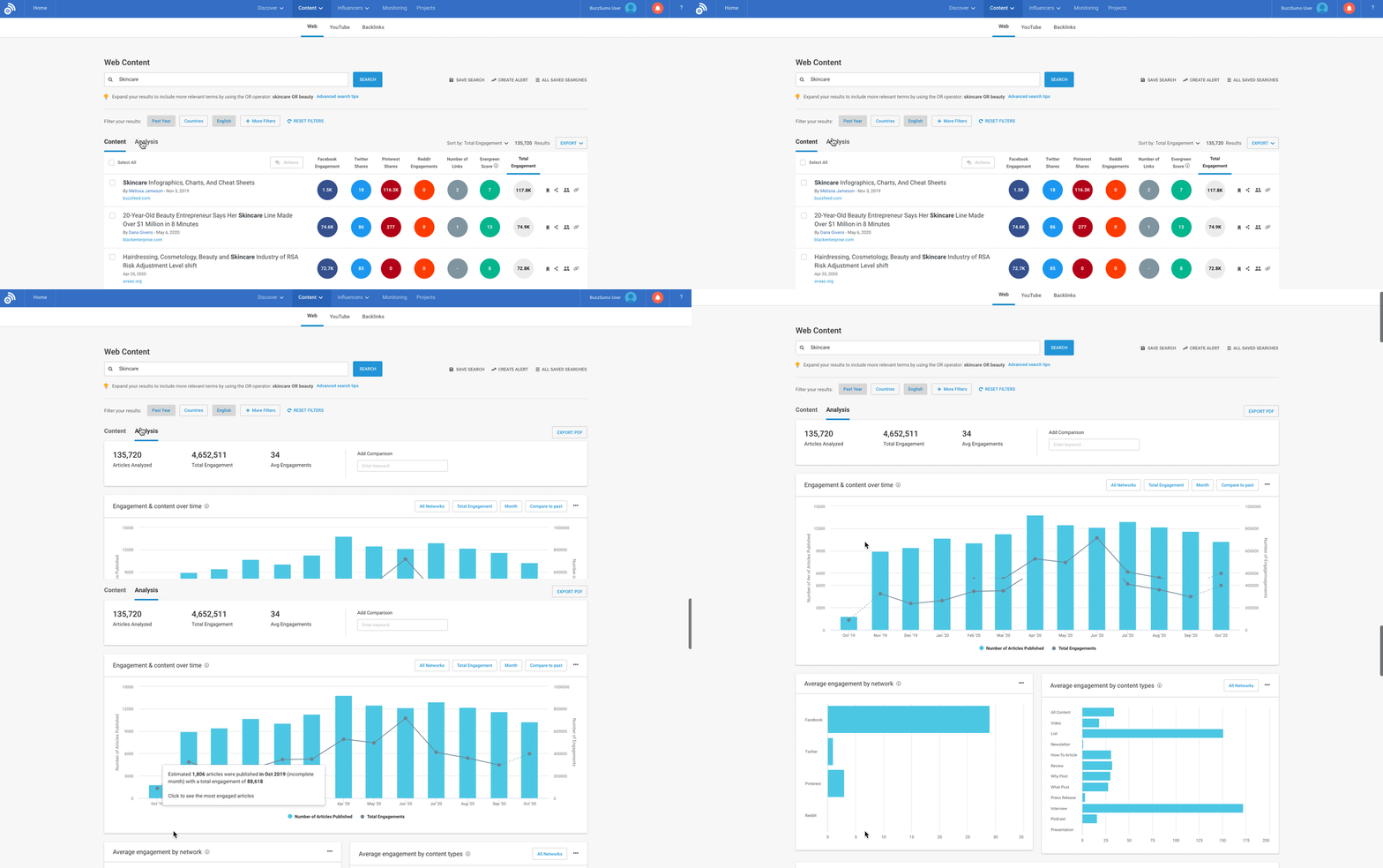
    To be effective in content marketing, you must conduct thorough research, which is why BuzzSumo is a favorite among most marketers.

    BuzzSumo is a one-of-a-kind content research tool that discovers and connects you with top influencers in your field. You can look for hot themes and narrow your search to generate both evergreen and trending content tailored to your target audience. From there, you can then examine your content’s metrics and social mentions to determine performance.

    This tool also offers more than basic content research, it also has Keyword research, Influencer search, Content analysis, Crisis management, and Brand monitoring tools.

    The paid plan starts at $79 per month.

    SEMrush

    When it comes to SEO, you’ll need an all-in-one marketing tool that can not only do keyword research but also help you track how your site is performing: whether that’s by tracking keyword positions, site analytics, or backlinks. SEMRush is an all-in-one platform for SEO and your website’s visibility and analytics. It can also be used to evaluate organic search ranks for your keywords and see what your competitors have done.

    Buffer

    Buffer is another social media management system that’s popular with marketers to help organize campaigns. You can link all your social media channels in this tool and schedule out posts in advance. This is a helpful tool to minimize the time you spend on managing your socials as you can have everything in one place.

    Buffer allows you to plan, create, and schedule social media posts, track post performance with smart analytics, and communicate with your followers from a social media inbox. Furthermore, you and your team may use Buffer to manage all of your organic social strategies.

    Mailchimp

    MailChimp is a solution for email marketing and social advertising that automates and orchestrates campaigns. It’s an excellent choice for small businesses. Mailchimp’s basic service is free until you reach 2,000 subscribers on your list. It provides the essential capabilities you require without making managing your email marketing too complicated.

    You can track the traffic generated by your campaigns, and MailChimp integrates with a variety of different SaaS firms. The technology is particularly effective for email drip marketing. It’s a viable choice for engaging your audience.
    Yoast

    Yoast SEO

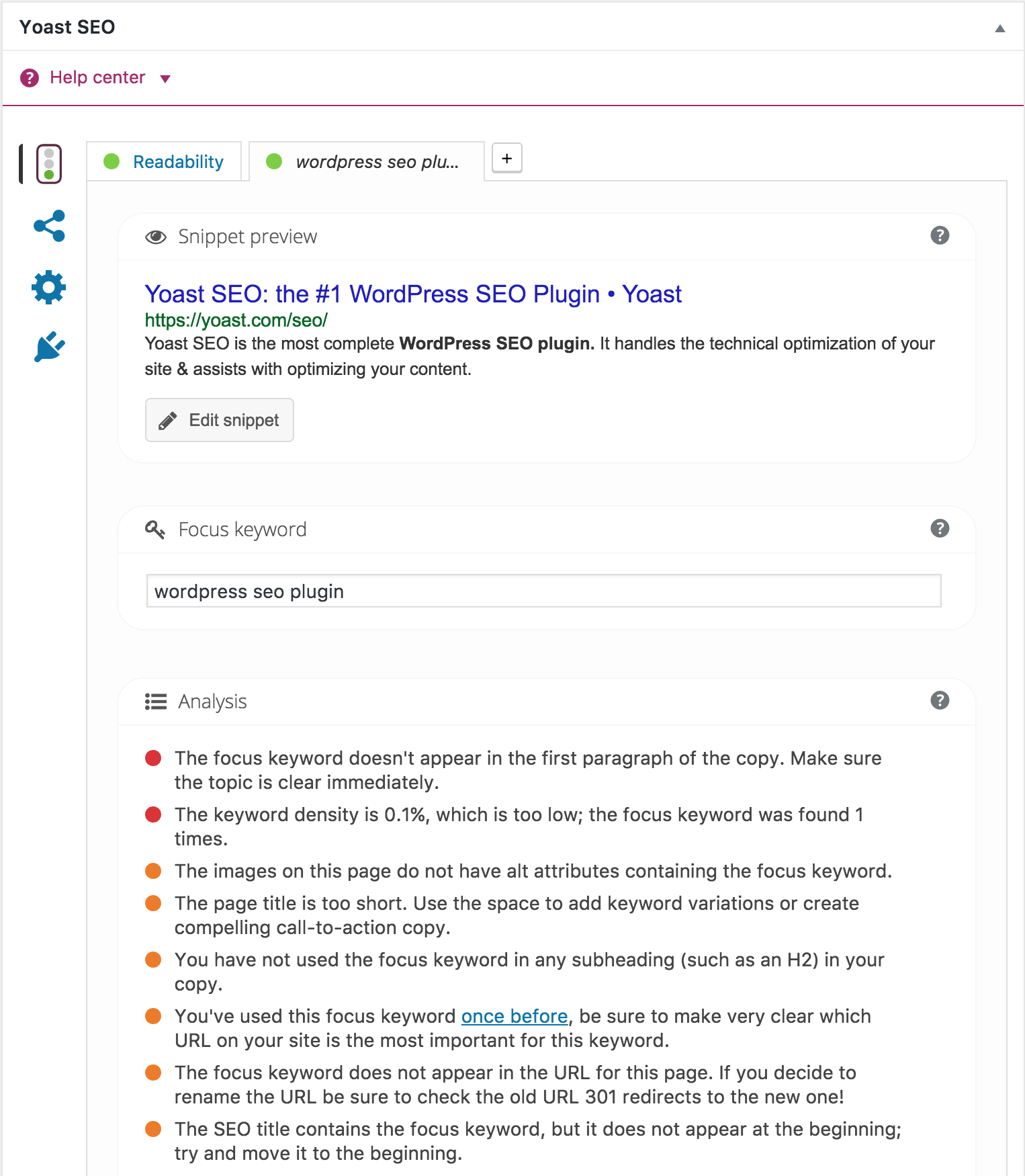
    Yoast is one of the greatest digital marketing tools for SEO content optimization because it has a fantastic free version. Yoast will advise you where to put your keywords, how to increase readability, and, perhaps most crucially, what you’re doing wrong so you can fix it.

    It’s a useful and FREE WordPress plugin that analyzes page copy for SEO friendliness based on keyword density, alt-attributes, SEO titles and Meta descriptions, slug, and so on. It cannot guarantee ranking because it has no influence on search engine algorithms, but it provides a good approximation of how well your material is written based on your keyword.

    This tool is wonderful to use as a guided SEO editor while writing because it alerts you to crucial on-page SEO methods you should be employing.

    Canva

    Need to create a logo but lack the time or funds? Or a quick social media graphic for a promotion but don’t know how to use Adobe?

    To keep your audiences engaged, you should use visual content. For any images and graphic design needs, Canva is a great tool. It’s a free platform that can assist you in creating bespoke images for social media and other projects. There are templates ready to use to create stunning pictures for everything from business cards to book covers.

    This online tool is always evolving, adding new graphic design features and templates for social media, infographics, marketing posters, business cards, eBooks, and everything else you might possibly require. And Canva’s free templates are very useful!

    Trello


    Marketing necessitates organization. Trello, like ActiveCollab before it, focuses on project management and organization. It may be used to organize chores, manage projects, and much more.

    Trello is simple to use and makes content organization considerably more efficient. It’s an excellent tool for organizing and distributing content to team members, as well as keeping track of ideas. And it’s free!

    Slack

    The success of any project in the realm of digital marketing tools is dependent on the ease of communication between teams. That is why you should invest in simple software that allows your staff to engage and share data without interruption.

    Slack is a popular medium for team collabs. Because of its simple data sharing and simple message search possibilities, this tool has earned the hearts of many digital marketers.

    Most significantly, Slack integrates with all major project management, office management, sales, productivity, design, and development tools, allowing you to keep on top of every part of your digital marketing strategy.

    Dropbox

    With this platform, you can exchange documents, photographs, infographics, and anything else you desire. This platform provides cloud storage for everyone, from businesses to individuals.

    You can simply share documents with your colleagues or clients using this cloud sharing service, and because the documents are securely encrypted, you don’t have to worry about data theft.


    Wrap Up

    Digital marketing is not the same as traditional marketing campaigns. As a result, if you use these digital marketing tools for your small business, you will most likely get more out of them. Always remember to think about your users, not just about the size of your business – you need to understand what that unique user will be looking for and fill their needs. There are literally hundreds of digital marketing tools for small businesses available — what works for one may not work for another.

    Visit our blog for more articles like this and like our Facebook Page.

     

  • 9 Ways Building Brand Authority with Content Marketing

    9 Ways Building Brand Authority with Content Marketing

    9 Ways Building Brand Authority with Content Marketing

    Having brand authority makes a big difference when someone is contemplating whether to buy from your brand or not. In this post, we will share tips on how to build brand authority with content marketing.

    In gauging your authority level, you must not assume that you fully understand how your viewers see you. Before launching any marketing strategies, make sure to do your research. How is the search traffic for your brand? What terms are people searching for that are related to your brand? How do people find you? Are you mentioned by others on social media?

    Utilize google and all its tools to help you get a perspective of how people discover and see your brand.

    Building brand authority is not easy and does not happen overnight. It’s a marathon. It takes a lot of effort and work, but the benefits you get from it are massive and worth every sweat you pour into it.

    Here’s how content improves brand authority:

    • Educate your audience about your products and services.
    • Help you gain better leads and conversions.
    • Build strong relationships between you and your audience.
    • Helps build a sense of community.
    • It boosts brand authority.

    So how exactly can a brand build authority? Here are some ways on how to build brand authority with content marketing.


    Answer customer’s questions

    Nowadays, people rely on the internet to get the information they are looking for. If you want to become an authority figure in your field, one of the many things you need to do is to provide value to your audience.

    Content marketing isn’t only about making personalized content for your brand and selling them to consumers. It is also about providing information to your audience by answering their questions.

    Providing answers to your viewers not only builds your brand awareness but also builds your brand authority.


    Take Advantage of Social Media

    The power of social media is at its high today, and for so many years now. The opportunities you get when you know how to tap into it are limitless and it’s a great platform to connect with your audience, potential customers, influencers, and possible business partner/s. By leveraging social media, you can easily share your expertise and quality content with a broader market.

    Create Captivating Visuals

    We have always accentuated how visuals are just as important as quality text. Your content should not only be full-on text, it should also have visual elements such as an infographic, high-quality images, or videos that can attract the reader’s attention.

    Additionally, these visual elements can be used and repurposed in different ways for your social media platforms.

    Be consistent with your visuals so that your branding is clear. Incorporate photos related to your brand and include your logo so that people will easily remember you.


    Keep your website current

    Monitor your website and keep it updated on a regular basis. Any errors affect your brand reputation and it will negatively affect your customer’s experience. Having a well-working website shows that you care about your brand and your customers.


    Base Your Content on Relevant Studies and Reports

    By basing your content on relevant studies, you are showing your readers that you want to give them fresh and helpful information. You can also conduct surveys and studies to provide more value to your audience. This is a good way to build your brand authority with content marketing.


    Contribute as a Guest Blogger on Authoritative Sites

    Blogs with high domain authority are the target because these websites are the ones leading in their industries. Guest blogging on authoritative sites will allow you to showcase your knowledge and expertise to their audience and this has many benefits. Aside from building brand recognition and authority, this is also a great link-building strategy that can bring more traffic to your site.

    Brand Authority with Content Marketing

    Produce Industry-Related Content

    Another way to build brand authority with content marketing is by producing industry-related content. Demonstrate industry-specific expertise and knowledge and even if this kind of content doesn’t necessarily address the customer’s questions, it can still resonate with them.

    Content that gives insight into what’s happening in the industry can work well in building brand authority.


    Make customer-based content for your website

    You can utilize your online reviews to gain and build trust. Each of your customers has different views and opinions about your product/service. Whether that review is good or bad, you should know about it. Use the feedback you get from previous customers and incorporate it into your content strategy.


    Team up with other brands to build a community

    Partner up and work with the right people to grow your brand. Look for partnership opportunities with successful brands in your industry that share your vision and values. A wonderful and strong collaboration can make a positive impact on your audience and you will be perceived as a brand that knows how to build and nurture relationships.


    Content marketing is powerful and investing more of your time and effort in it is a great step to improve your brand authority. Making content that benefits and give value to your audience is a mark of a true marketer.

    Continue building your strategy with the tips given above and be consistent to ensure positive results. Good luck!

  • 9 Helpful Tools for Content Creation

    9 Helpful Tools for Content Creation

    9 Helpful Tools for Content Creation

    As a content creator, it’s important to have tools to help you create effective, high-quality, and engaging content. And honestly, there are tons out there that will work differently on each one, though its functionality will highly depend on how you work. In this post, we will share with you some of our favorite helpful tools for content creation that we regularly use.

    This list may or may not apply to marketers as it is curated for content creators whose goal is to create relevant and helpful content for their respective audiences. 


    Helpful Tools for Content Creation

    Tools to Create Relevant Content and Ideation

    Google Trends

    This is a free tool that’s highly useful to keep you in the loop. Google trends give you insights into the current relevant content. It’s a great tool to use for those who want to create content and get quality links and traffic. If you have a blog or an active social media presence and you want to develop content that’s relevant to a specific demographic, this tool is perfect.

    Google Trends can also help you with keywords research and generate content ideas.


    9 Helpful Tools for Content Creation


    Reddit

    Reddit is an online forum where hundreds of thousands of people flock to learn and discuss more the topics they’re interested in. It’s a minefield of content ideas and all you have to do is dive into its waters. Everything from digital marketing to oil painting to kpop to gardening, name it, it’s there.

    You can use this tool by asking for insights that can help you develop and improve your content.


    Ahrefs

    This tool is great for keywords research and developing your content calendar. It’s a paid tool (and a pricey one), although you can make use of its 7-day free trial to try out its features. The Ahrefs Keyword Explorer is also one of the best keyword research tools in the market. If you want to improve your SEO, this is a great tool to use.


    Tools for Writing Content

    Grammarly

    When you write your content, you won’t always spot the mistakes you make along the way. Grammarly is a great tool to edit your work and proofread it from spelling, grammar, and punctuation errors. You can copy and paste your content directly into the Grammarly site, or you can install its chrome extension so it will have access to everywhere you are making your piece. Super, super helpful, 10/10 – will recommend!


    Dynalist

    This is a planning tool that will help you outline and draft your content. It’s also useful for note-taking, formatting your headlines, and organizing your ideas. Dynalist is very helpful when I build my content because it’s where I dump all my ideas for a post. All content creators will understand the importance of having a draft and Dynalist is a great tool to use because of its simple interface and easy-to-use functions.


    Helpful Tools for Content Creation


    Notion

    A notion is a productivity tool where you can make use of its task management and organization features to manage your personal and professional life. I included this app in this list because it’s also a great tool for writing content. Much like, Evernote, Notion is a few levels above because it does so much more. You can create several pages where you can put in a lot of things including a calendar, to-do lists, and of course, notes upon notes for content generation and ideation.


    Tools for Imagery and Graphic Design

    Unsplash

    To make your content more engaging, you’ll need to have images. Unsplash is a media library of thousands of high-quality stock photos you can use for free. Not everyone has the time to take custom photos, so having a stock of license-free images you can use for anything is very helpful.


    Canva

    Canva is my ultimate tool for designing visual content, whether it’s for a blog or for social media. It’s a simplified graphic design tool that you can use for free or pay for a premium to access more features. Bonus: it also has a library of photos, graphics, and illustrations you can use!

    Read more about Canva here


    Google Drive

    The last tool that I’m sure you all know is Google Drive. It’s a cloud storage where you can keep all your files safely and have access to them wherever you are. I don’t know anyone who’s not using this tool, but if you are one of them, you seriously need to so that you can make your life easier.

    Final Thoughts

    And these are all the helpful tools for content creation we love to use on a regular basis. While content creation is a skill that can’t be replaced by any tool, these tools can certainly amp up your pieces and help you gain more insights on how to improve said skill. These tools will be useful to plan and develop your content better and will make your work more efficient.

    Do you have any favorites that aren’t on this list? Let us know!

    For more helpful articles like this, make sure to drop by our blog.